
How to stay focused under pressure isn’t about being fearless or mentally tough.
It’s about what you’ve built before the pressure arrives.
Too often, resilience is treated like something people are either born with or they aren’t.
But resilience isn’t fixed.
It’s built slowly and deliberately through experience, discomfort and moments when things don’t go to plan.
If you understand the first four steps of our framework, you understand what’s required before resilience can truly be tested.
You understand the importance of investment.
You understand why uncertainty must be embraced.
You understand the role risk plays in growth.
You understand why exposure to new environments matters.

Now it all comes down to one thing.
Focus.
Because when pressure hits, none of those steps matter if you can’t stay present in the moment.
Focus Is What Holds It All Together
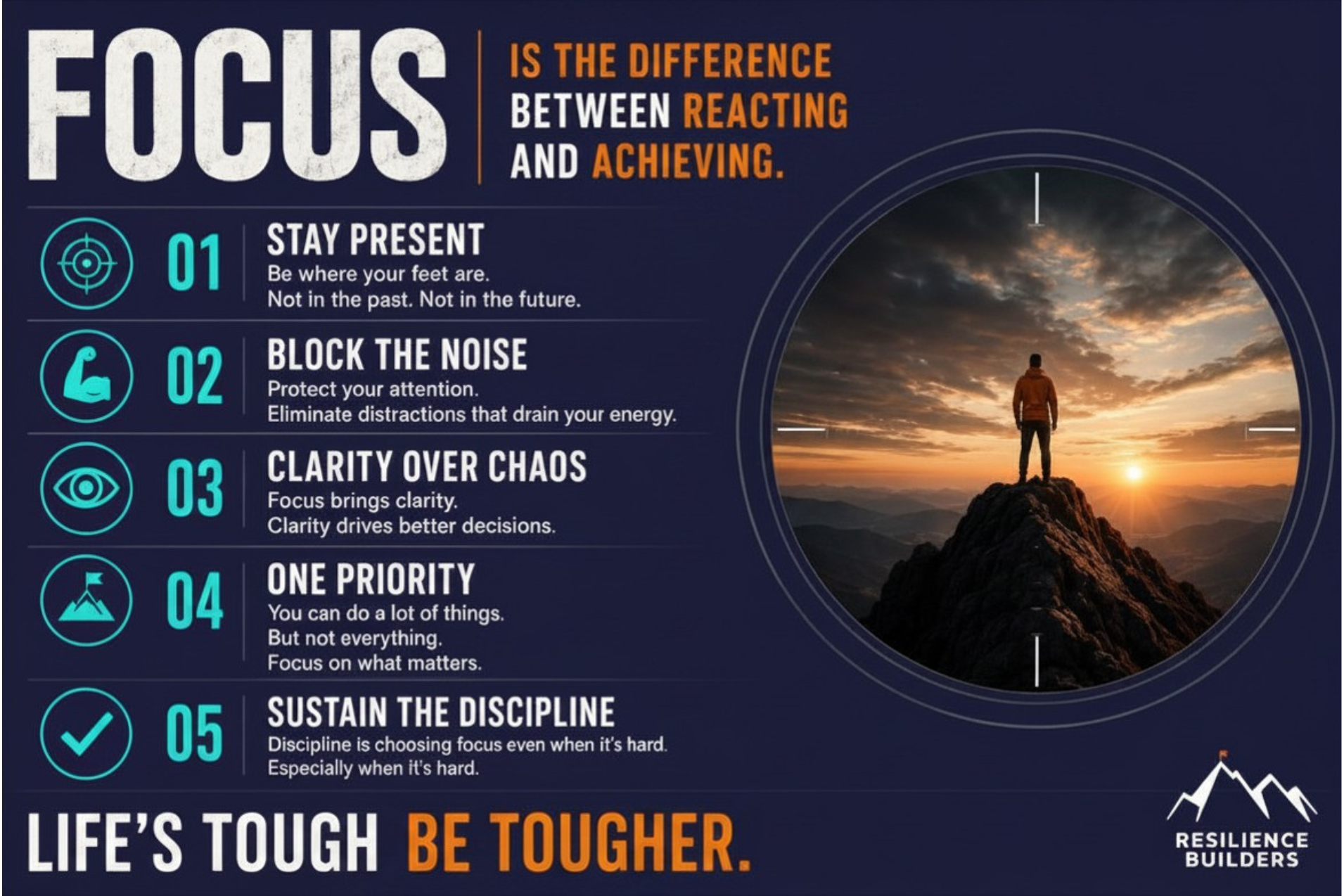
Focus isn’t about concentrating harder.
It’s about being exactly where you are, when it matters most.
I’ve seen it in the Himalayas. Sherpa mountaineers climbing through unstable terrain where one wrong step has serious consequences. They’re not thinking about the summit. They’re not replaying yesterday.
They’re locked in on the next move and this is what keeps them alive.
And it’s the same skill that shows up everywhere else.
In boardrooms.
In sport.
In tough conversations.
Any moment where the outcome actually matters.
Your ability to stay focused under pressure is what determines how you respond.
The Moment That Tests You
You’ve felt it.
A presentation that matters.
A decision you can’t avoid.
A conversation you’ve been putting off.
Nerves kick in and your mind starts racing.
You drift away from what actually matters.
That’s the moment because losing focus there is easy.
But staying present?
Blocking out the noise?
Executing anyway?
That’s resilience in action.
When Everything Stops: The 2010 AFL Grand Final
There’s a moment that captures this perfectly.
The 2010 AFL Grand Final at the Melbourne Cricket Ground.
Over 100,000 people.
Two clubs carrying years of expectation.
Everything on the line.
And then the siren goes. The scores are level. No winner. Just silence.
Players dropped where they stood. Physically spent. Emotionally drained. No one had planned for this.
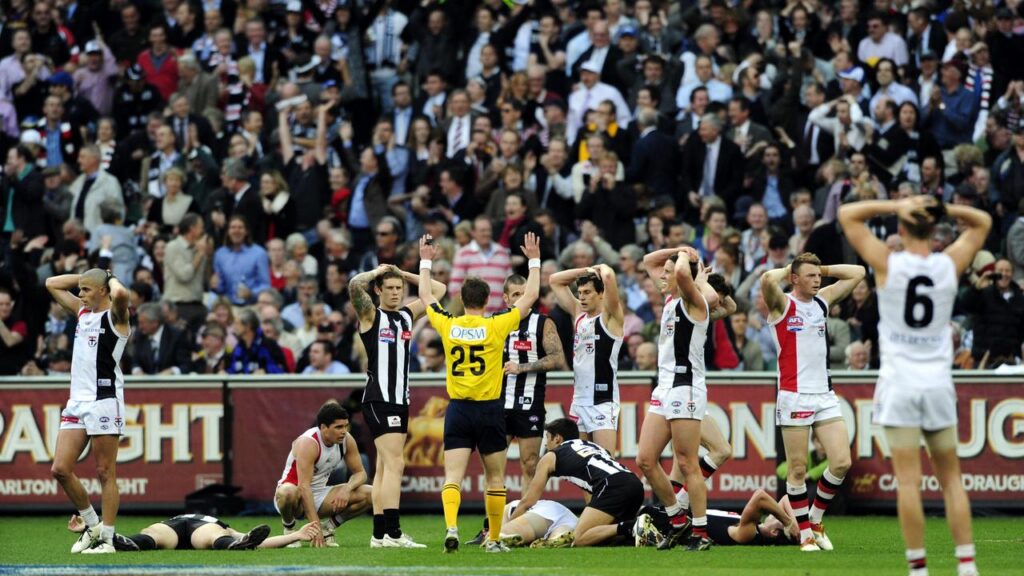
And in that moment, everything could have unravelled.
Confusion.
Emotion.
Distraction.
But it didn’t.
Collingwood’s senior coach Mick Malthouse locked in immediately.
He turned to David Buttifant – my co-author of Life’s Tough, Be Tougher and the architect behind Collingwood’s high performance program – and asked:
What do we need to do to get our boys ready for next week?
That was the shift.
Not what just happened.
Not how they felt.
But what matters now?
Refocus. Reset. Execute.
From that moment, David went to work.
The data showed the players were completely depleted.
That could have become the story but it didn’t.
Instead, the focus shifted to what would actually move them forward.
Connection, clarity and belief.
They anchored back to something they had already proven.
A brutal preseason training camp nine months earlier in Arizona. A climb in extreme conditions then backing it up under heavy fatigue.



They’d actually been in a similar situation before and that became the perfect reference point.
Not fatigue and not doubt.
Capability.
A week later, Collingwood returned clear, connected and ready.
They didn’t just perform.
They won convincingly.
Same Principle, Different Mountain
That idea of reference points?
I’ve lived it myself and shared its importance with hundreds of audiences.
Two years before I stood on the summit of Mount Everest, I had a very different experience on Cho Oyu, the sixth highest mountain in the world at 8,201 metres.
It didn’t just test me.
It changed me.
On that expedition, my climbing partner and friend died next to me in our tent.
There’s no way to soften that experience and it forced me to reflect on everything.
The decisions we made.
The communication between us.
What was said and what wasn’t.
The mistakes we both made.
And that’s the uncomfortable truth.
We both knew things weren’t right, but neither of us fully spoke up.
Not honestly.
Looking back, I don’t see that as a failure of experience or capability.
I see it as a lesson in vulnerability, communication and the environment people create around themselves under pressure.
Because when people don’t feel able to say what’s really going on, especially in high pressure situations, things get missed.
Decisions get delayed. Focus drifts and the consequences can be brutal.
At the time, my experience on Cho Oyu didn’t feel like progress.
It felt like grief, exhaustion, loss and failure.
But over time, I realised something important.
That experience became one of the most powerful reference points of my life.
Because when I returned to the Himalayas for Everest, the pressure was still there.
Fatigue.
Risk.
Uncertainty.
Exposure.
All of it.

But this time, I wasn’t guessing.
I’d already seen what can happen when focus disappears, when people hold back and when the hard conversations don’t happen.
And that changed how I showed up.
More aware.
More present.
More willing to say what needed to be said.
Different mountain.
Same pressure.
But a completely different level of focus.
That became my reference point.
Not the summit.
Not the outcome.
My previous experience was forcing me to be better when it mattered most.
When Focus Locks In
On Mount Everest, there are moments where everything narrows.
The next step.
The next breath.
The next decision.
And if your focus drifts, even slightly, it matters.
That’s where everything comes together.
The investment.
The uncertainty.
The risk.
The exposure.
All feeding into your ability to stay present when it counts.
Just like Collingwood backing up from the drawn Grand Final in 2010.
A very different environment but the same principle.
Focus in Action ON MOUNT EVEREST
If you’ve made it this far, this is worth your time.
What does focus under pressure actually look like when the stakes are real? This short film from Nick Farr’s Mount Everest climb captures the mindset, emotion and resilience required to keep moving when every part of you wants to stop.
Focus Is a Skill You Train
This is the part most people miss.
They wait for pressure to arrive and hope they’ll handle it.
But focus doesn’t just show up when you need it.
You build it.
Every time you stay present in a difficult moment.
Every time you bring your attention back when it drifts.
Every time you choose to engage instead of avoid.
People are far more capable of staying focused under pressure when strong psychological safety exists within the team and environment around them.
Because this is where environments matter. Where people feel safe enough to stay engaged under pressure.
Bringing It All Together
Resilience isn’t built in one moment.
It’s built across many.
And it follows a path.
You invest.
You step into uncertainty.
You take on risk.
You move into new environments.
And when it matters most…
You focus.
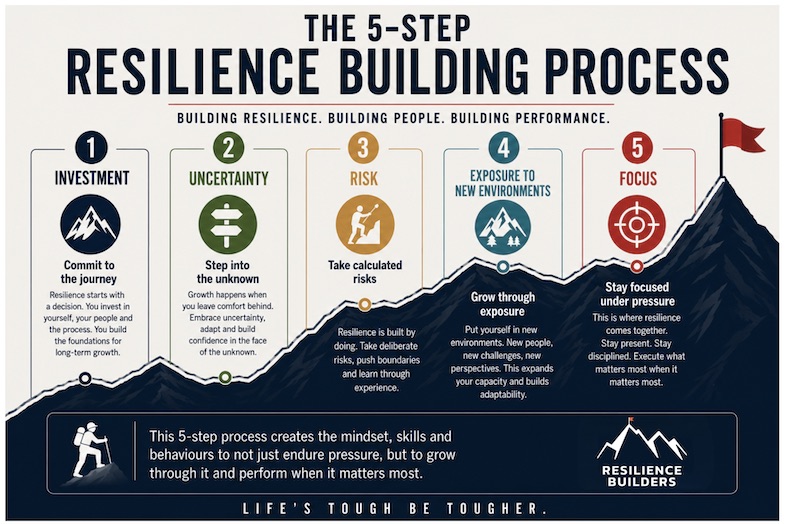
That’s what allows psychological recovery to happen.
That’s what allows you to respond instead of react.
That’s what allows you to keep moving forward when things get tough.
Final Thought
When pressure hits, don’t try to control everything.
Don’t get lost in what might happen next.
Come back to this:
You’ve been here before. What matters right now?
Focus on that.
Execute.
Then take the next step.
Want to Go Deeper?
This is just one part of a much bigger conversation.
These five steps — and the real stories behind them — form the foundation of our book, Life’s Tough Be Tougher.
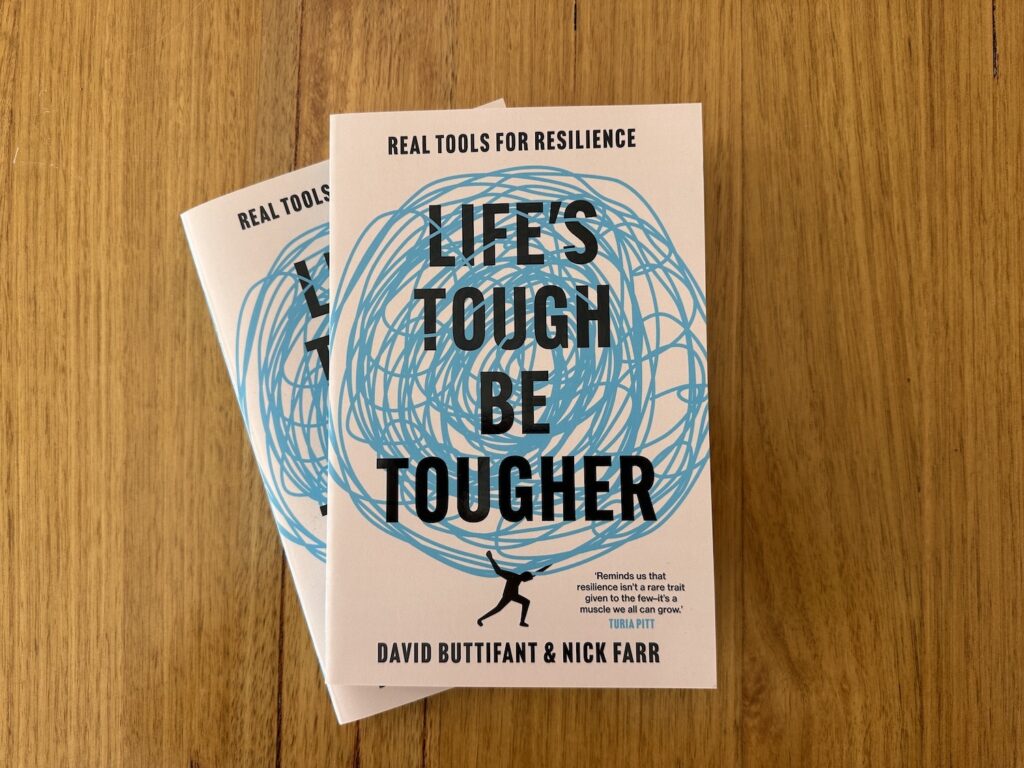
If this resonates, that’s where we unpack it properly.
Real experiences.
Proven strategies.
A framework that actually holds up when it matters.
👉 Learn more about Life’s Tough Be Tougher
FAQs: How to Stay Focused Under Pressure
What does it mean to stay focused under pressure?
Staying focused under pressure means being fully present in the moment, even when stress, uncertainty or distractions are high. It allows you to think clearly, make better decisions and execute effectively when it matters most.
Why is focus important for resilience?
Focus is what brings resilience to life. You can invest, take risks and step into uncertainty, but without focus in high-pressure moments, those efforts fall apart.
Can focus under pressure be trained?
Yes. Focus is a skill that can be developed through repeated exposure to challenge and practising bringing your attention back to what matters.
How do you stay focused in high-pressure situations?
Bring your attention back to the next step, the next decision or the next action. Avoid getting caught up in outcomes or distractions.
What are examples of staying focused under pressure?
Examples include athletes in competition, leaders making decisions and mountaineers operating in dangerous environments.
How does psychological safety help with focus?
Psychological safety allows people to stay engaged without fear, improving clarity, communication and performance under pressure.
What is the connection between focus and psychological recovery?
Focus helps reduce overwhelm, supports emotional regulation and allows faster recovery after high-pressure situations.
How do the five steps of resilience work together?
Each step builds on the last, with focus acting as the final piece that allows everything to come together when pressure hits.