


Psychological safety is a term that appears frequently in conversations about leadership, culture, and wellbeing — yet it is often misunderstood. At its simplest, it describes whether people feel safe to speak up at work.
Safe to ask questions.
Safe to raise concerns.
Safe to admit mistakes.
Safe to say, “I don’t know” or “I need help”.
Understanding what psychological safety is matters because it shapes how teams communicate, perform, and cope under pressure. When it is present, people contribute more fully. When it is missing, silence takes over — and problems grow.
What is Psychological Safety?
At a team level, psychological safety reflects a shared belief that speaking openly will not lead to embarrassment, punishment, or exclusion.
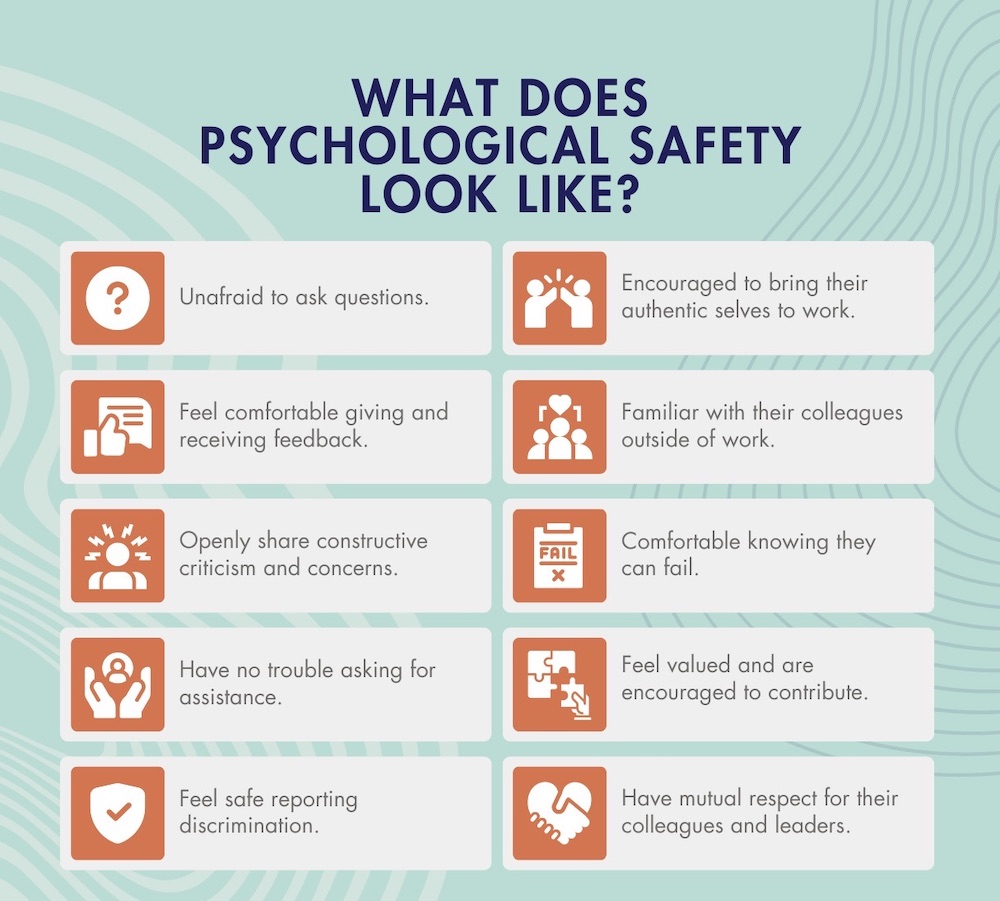
In practical terms, this means people feel able to:
- Share ideas and perspectives
- Ask for clarification
- Challenge decisions respectfully
- Raise issues early
- Learn openly from mistakes
This does not remove accountability or expectations. Instead, it creates the conditions where honesty, learning, and responsibility can coexist.
Why Psychological Safety Matters at Work
Work today is complex, fast-moving, and often high-pressure. Decisions are made quickly, change is constant, and the cost of hidden problems is high.
When people feel able to speak up:
- Issues are identified sooner
- Decisions improve through broader input
- Teams adapt more effectively to change
- Stress is addressed before it escalates
When people do not feel safe to contribute, they protect themselves. Over time, this leads to disengagement, frustration, and avoidable risk.
Impact on Team Performance
Strong teams are not those that avoid mistakes — they are the ones that detect and respond to them quickly.
An environment where people feel comfortable raising concerns supports:
- Better decision-making
- Stronger collaboration
- Faster problem-solving
- Continuous improvement rather than blame
Teams that communicate openly perform more reliably, particularly when pressure is high.
Psychological Safety and Wellbeing
Many workplace wellbeing issues are not caused by workload alone, but by unspoken tension, uncertainty, and fear of consequences.
A safer team environment helps by:
- Reducing chronic stress and anxiety
- Encouraging early conversations about pressure
- Supporting recovery after setbacks
- Strengthening connection and belonging
When people feel heard and respected, they are better able to cope with challenge and change.
What Happens When People Don’t Feel Safe
Low levels of safety rarely show up dramatically at first. They tend to appear through subtle patterns such as:
- Meetings dominated by a few voices
- Reluctance to question decisions
- Problems raised only after they escalate
- Blame replacing learning
- Gradual disengagement or turnover
Left unaddressed, these behaviours erode trust, performance, and culture.
Connection to Psychosocial Risk
An organisation’s ability to manage psychosocial risk depends heavily on whether people feel able to speak up.
When they do not, issues such as excessive workload, unclear roles, bullying, or poor leadership behaviour often go unreported. This increases both personal harm and organisational exposure.
Creating safer conditions for open dialogue supports:
- Earlier identification of hazards
- More honest conversations about pressure
- Better prevention and control measures
This is why open communication is increasingly linked to health and safety obligations.
How Psychological Safety is Built
Psychological safety is shaped less by policies and more by everyday behaviour.
Key influences include:
- How leaders respond to mistakes
- Whether questions are welcomed
- How disagreement is handled
- Whether people feel genuinely listened to
- How pressure is managed in difficult moments
Small interactions, repeated consistently, determine whether people feel safe or silenced.
Common Myths and Misunderstandings
One persistent myth is that creating safety lowers standards.
In reality, the opposite is true. Teams with open communication:
- Hold clearer expectations
- Give more honest feedback
- Take greater ownership
- Perform more consistently over time
This is not about comfort. It is about creating conditions where people can engage fully and perform at their best.
From Concept to Practice
Understanding what psychological safety is provides a foundation. Applying it requires intention and skill.
Effective approaches focus on:
- Shared understanding and language
- Leadership capability
- Practical tools for teams
- Ongoing reinforcement rather than one-off initiatives
This is why many organisations invest in structured programs rather than relying on goodwill alone.
Where to Go From Here
If you would like to explore this topic further, the following resources may be helpful:
- Psychological safety workplace programs
- Psychological Safety At Work
- ISO 45003: A Practical Guide to Creating Psychologically Safe Workplaces
- Resilience Builders YouTube channel
Creating safer, more open workplaces is not a trend. It is a foundational capability for sustainable performance and wellbeing.